Thailand Agricultural Commodity Supplier Guide for Bulk Buyers
Thailand is a major sourcing base for rice, refined sugar, edible oils, coconut
products, tapioca starch, and other food ingredients. It is also a practical
export hub for fertilizer and industrial products moving into Asia, Africa, the
Middle East, Europe, and the Americas. However, selecting a supplier requires
more than finding a product name and asking for the lowest price.
Bulk buyers need to confirm the producer, grade, origin, specification,
certification, packaging, loading port, payment terms, inspection procedure,
and claims process. This guide organizes those checks around the main products
international buyers source through MC INTERNATIONAL and qualified partner
companies.
Use the product links to review detailed specifications. When requesting a
quotation, include the required grade, quantity, destination port, packaging,
and preferred Incoterm so the offer can be compared accurately.
Quick supplier-selection framework
Before comparing individual commodities, apply the same basic qualification
process to every potential supplier:
- ☐Confirm the legal company name, registered address, and authorized sales contact.
- ☐Identify whether the company produces the product, sources through qualified partners, or uses both models.
- ☐Request a current specification sheet and representative Certificate of Analysis.
- ☐Confirm the product origin, production facility, batch controls, and traceability process.
- ☐Verify relevant SGS, ISO, HACCP, Halal, Kosher, organic, or market-specific documents.
- ☐Agree on packaging, net weight, labeling, palletization, and container payload.
- ☐State the loading port, destination port, Incoterm, payment method, and quotation validity.
- ☐Define sampling, pre-shipment inspection, rejection tolerances, and dispute procedures in the contract.
This framework separates a credible export offer from a price sheet that omits
important costs or quality obligations.
Thai rice exporters and bulk rice suppliers
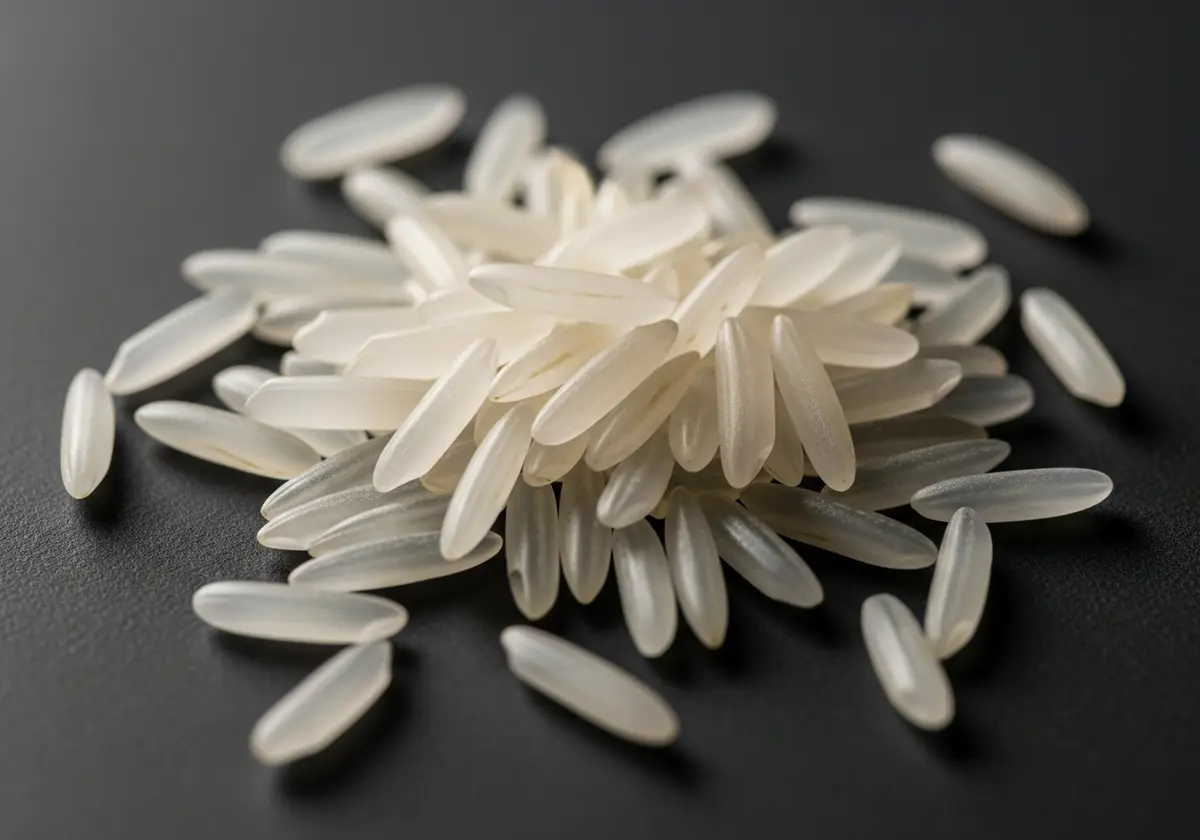
A professional Thai rice exporter should identify the rice variety, crop
year, milling degree, broken percentage, moisture limit, foreign-matter limit,
origin, and packaging. A dependable Thai rice supplier should also provide
the phytosanitary documents and inspection records required at the destination.
The term bulk rice supplier covers several different grades. A buyer should
not compare quotations until the grades are equivalent. Premium aromatic rice,
standard long-grain rice, broken rice, and parboiled rice have different
applications, prices, and consumer expectations.
| Target rice requirement | What the buyer should confirm | Relevant product page |
|---|---|---|
| Thai Jasmine rice supplier | Hom Mali authenticity, aroma, crop year, 5% broken maximum, moisture and geographic origin | Thai Jasmine rice specifications |
| Thai Jasmine rice exporter | Export documents, SGS inspection, packaging, loading port and shipment schedule | Thai Jasmine rice export supply |
| Hom Mali rice supplier | Thai Hom Mali grade, varietal identity, fragrance, milling and traceability | Hom Mali rice supplier page |
| Parboiled rice supplier | Parboiling consistency, color, broken percentage, moisture and cooking performance | Parboiled rice specifications |
| Long grain white rice supplier | Grain length, milling, whiteness, broken percentage and intended market | Long grain white rice range |
| 5% broken rice supplier | Maximum broken kernels, moisture, polish and retail-grade appearance | 5% broken white rice |
| 25% broken rice supplier | Broken percentage, value positioning, institutional or processing use | 25% broken white rice |
| Basmati rice supplier | Variety such as Pusa 1121, grain length, elongation, aroma and origin | Basmati rice specifications |
| Glutinous sticky rice supplier | Amylopectin characteristics, crop origin, color and cooking texture | Glutinous rice specifications |
| Brown rice supplier | Whole-grain integrity, moisture, shelf life, insect controls and packaging | Brown rice specifications |
For container orders, confirm whether the quotation is based on a 20-foot or
40-foot container and whether payload limits at the origin and destination have
been considered. Bag dimensions, liner requirements, private-label artwork,
fumigation, and palletization can materially affect the final landed cost.
Rice samples should be evaluated for appearance, odor, moisture, broken
percentage, chalkiness, foreign matter, cooking yield, texture, and aroma. The
contract should state which inspection method controls if the supplier and
buyer obtain different laboratory results.
Refined sugar and VHP raw cane sugar suppliers
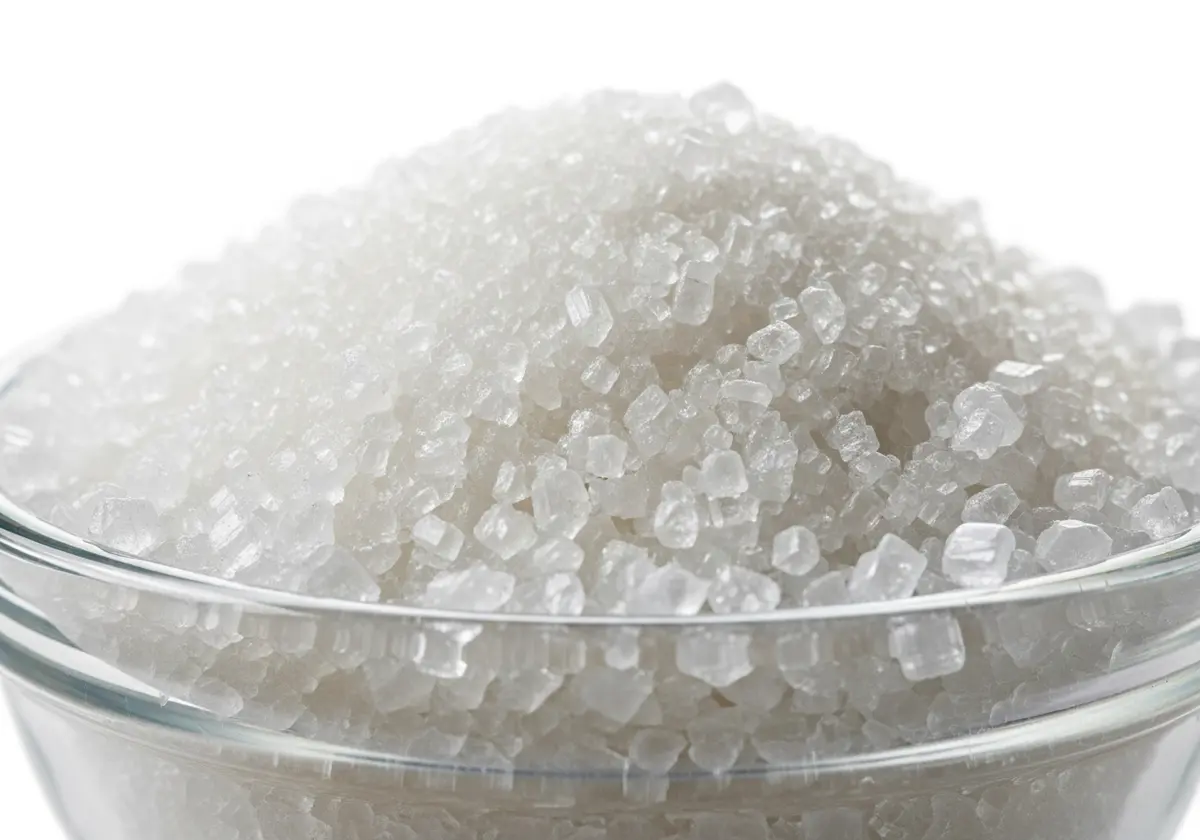
Sugar grades cannot be judged by color descriptions such as “white” or “raw”
alone. ICUMSA color, polarity, moisture, ash, grain size, reducing sugars, and
the intended application determine whether an offer is suitable.
An ICUMSA 45 sugar supplier serves buyers that need a high-purity refined
white sugar for food, beverage, pharmaceutical, or retail applications. An
ICUMSA 45 sugar exporter Thailand should document origin, refinery controls,
quality inspection, loading conditions, and the export paperwork attached to
the shipment.
| Target sugar requirement | Main procurement focus | Relevant product page |
|---|---|---|
| Refined sugar supplier | ICUMSA grade, polarity, moisture, ash, grain size and food-safety documents | Refined sugar range |
| Refined white sugar exporter | Export capability, container or vessel loading, inspection and traceable documents | ICUMSA 45 refined sugar |
| ICUMSA 100-150 sugar supplier | Industrial food grade, color range, processing application and price-to-performance fit | ICUMSA 100-150 sugar |
| Raw cane sugar supplier | Polarity, ICUMSA color, residual molasses, moisture and intended re-refining or food use | Raw cane sugar specifications |
| VHP raw cane sugar supplier | 99.30% minimum polarity, low moisture, safety factor and refinery yield | VHP raw cane sugar |
| VHP sugar exporter | Bulk vessel or bagged shipment capacity, SGS testing and refinery documentation | VHP sugar export supply |
| Very High Polarity sugar | Confirm that “VHP” means the contracted polarity and impurity limits, not a general marketing label | Very High Polarity specifications |
| Bulk sugar supplier | Monthly volume, packing format, port capacity, shipment schedule and pricing basis | Bulk sugar products |
Sugar quotations should clearly state whether pricing follows a fixed offer or
a recognized market benchmark plus an origin premium. Buyers should also
confirm whether the shipment is in 25kg or 50kg bags, one-ton jumbo bags,
containers, breakbulk, or a bulk vessel. Each option changes handling, freight,
inspection, and discharge costs.
For refined sugar, request a sample and COA from the grade being offered. For
VHP and other raw sugar intended for re-refining, focus on refinery recovery,
polarization, moisture, dextran, ash, reducing sugars, and safety factor.
Urea fertilizer and AdBlue DEF sourcing

A credible urea fertilizer exporter Thailand should disclose the actual
product origin and explain the export route clearly. Thailand can serve as a
regional trading and logistics hub, but buyers should not assume that every
urea cargo was produced in Thailand.
An experienced urea fertilizer supplier will specify nitrogen content,
biuret, moisture, particle size, crushing strength, and packaging. The phrase
46% nitrogen urea supplier should be supported by a COA that states the
minimum nitrogen level and the test method.
| Target fertilizer requirement | What to verify | Relevant product page |
|---|---|---|
| Granular urea supplier | 2-4mm particle distribution, crushing strength, caking control and broadcast suitability | Granular urea 46% |
| Prilled urea supplier | Smaller particle range, dissolution, blending suitability, moisture and storage | Prilled urea 46% |
| Bulk urea exporter | Monthly allocation, bag or bulk-vessel capacity, port handling and independent inspection | Urea fertilizer export range |
| AdBlue DEF supplier | Automotive-grade urea source, concentration, contamination control and packaging | AdBlue DEF product page |
| ISO 22241 AdBlue supplier | 32.5% high-purity urea solution, ISO 22241 compliance and dedicated handling equipment | ISO 22241 AdBlue DEF |
Agricultural urea and automotive-grade urea are not interchangeable. AdBlue or
Diesel Exhaust Fluid requires high-purity urea, demineralized water, controlled
production, and contamination-safe storage. Standard fertilizer-grade urea
must not be dissolved and represented as ISO 22241-compliant DEF.
For bagged fertilizer, confirm the bag construction, liner, net weight, marking,
and pallet requirements. For bulk cargo, define hold cleanliness, loading
survey, draft survey, moisture protection, discharge rate, and acceptable
particle degradation.
Refined edible-oil suppliers and flexitank exports
An edible oil supplier Thailand may offer oils produced locally and oils
sourced through qualified regional or international producers. The supplier
should identify the actual origin and refinery for the contracted lot. A
professional cooking oil supplier should match the oil to the buyer's
application rather than offer every customer the same grade.
A bulk edible oil supplier should provide limits for free fatty acids,
peroxide value, moisture and impurities, color, odor, fatty-acid profile, and
oil-specific parameters. A food-grade cooking oil exporter should also
document food-safety systems, batch traceability, tank cleanliness, and
packaging suitability.
| Target edible-oil requirement | Main buying consideration | Relevant product page |
|---|---|---|
| Refined sunflower oil supplier | High-oleic or linoleic grade, oxidative stability, smoke point and origin | Refined sunflower oil |
| Refined soybean oil supplier | Fatty-acid profile, GMO documentation, oxidation control and application | Refined soybean oil |
| Refined palm olein supplier | Iodine value, cloud point, fractionation grade, fry life and sustainability needs | RBD palm olein |
| Refined corn oil supplier | Color, flavor, phytosterol profile, stability and retail positioning | Refined corn oil |
| Refined canola oil supplier | Low-erucic specification, neutral flavor, GMO status and cold clarity | Refined canola oil |
| Refined coconut oil supplier | RBD grade, melting profile, flavor neutrality and bakery or confectionery use | Refined coconut oil |
| Refined olive oil supplier | Olive grade, authenticity, fatty-acid profile, mild flavor and origin | Refined olive oil |
| Refined cottonseed oil supplier | Gossypol control, refining record, heat performance and snack-food suitability | Refined cottonseed oil |
| Refined avocado oil supplier | Purity, blend status, origin, fatty-acid profile and premium positioning | Refined avocado oil |
| Refined rapeseed oil supplier | Low-erucic food grade, GMO documentation, neutral flavor and processing use | Refined rapeseed oil |
A bulk oil flexitank supplier must control more than the oil itself. Confirm
the flexitank manufacturer, food-contact declaration, container inspection,
liner compatibility, loading temperature, net payload, seal numbers, photos,
insurance, and discharge instructions. IBCs, drums, jerrycans, and retail
bottles may be better when a buyer cannot receive a full flexitank safely.
Before signing a repeat contract, conduct a production trial. Measure flavor,
fry life, oil absorption, filtration behavior, finished-product shelf life, and
yield. The lowest price per ton may not be the lowest cost per finished unit.
Thai coconut products and tapioca starch suppliers
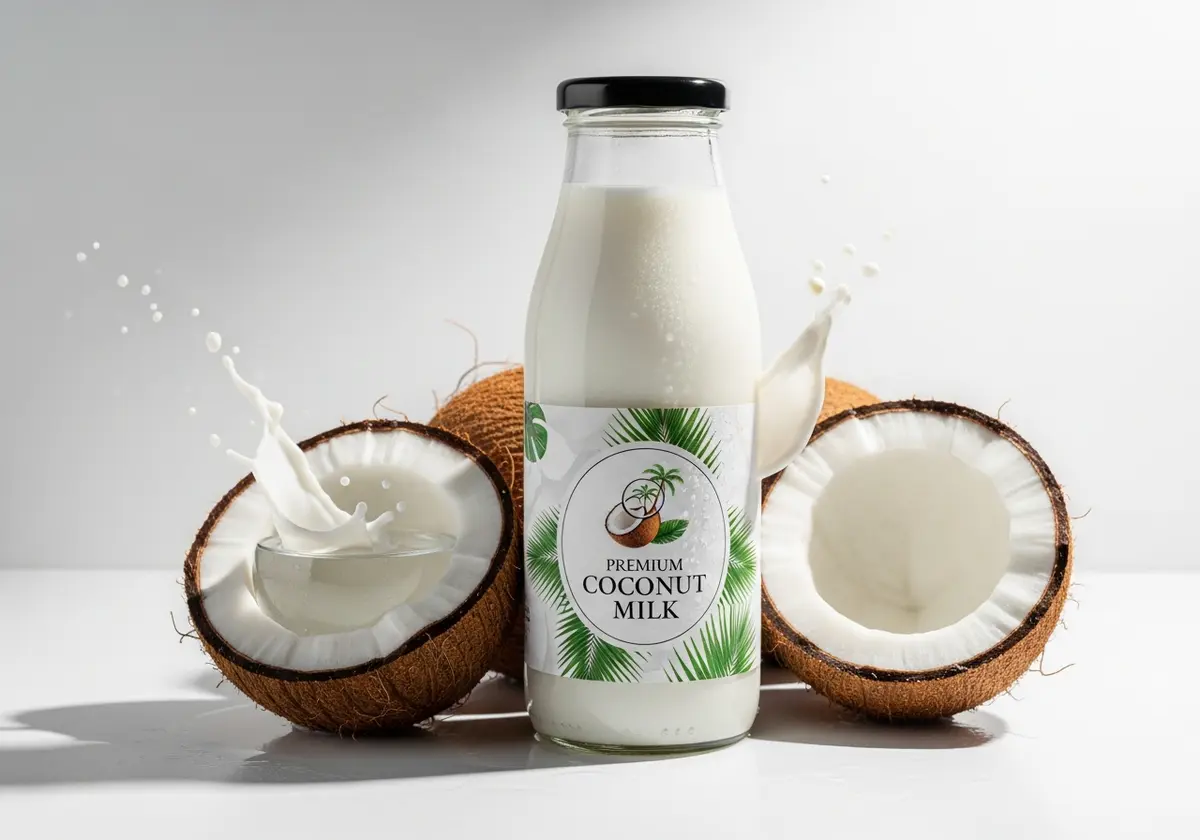
A qualified Thai coconut products supplier can consolidate coconut milk,
coconut cream, coconut milk powder, barista products, organic products, and
coconut water. However, each format has different fat, solids, heat-treatment,
packaging, and certification requirements.
| Target specialty requirement | Main buying consideration | Relevant product page |
|---|---|---|
| Thai coconut milk supplier | Fat percentage, total solids, UHT or canned format, stabilizers and shelf life | Thai coconut milk |
| Coconut cream supplier | 24-35% fat range, viscosity, formulation and dessert or culinary performance | Thai coconut cream |
| Coconut milk powder supplier | Full-fat or reduced-fat grade, carrier ingredients, solubility and 25kg packaging | Coconut milk powder |
| Barista coconut milk supplier | Foam stability, steaming behavior, latte-art performance and 1L retail format | Barista coconut milk |
| Organic coconut milk supplier | Valid organic scope, chain of custody, ingredient compliance and destination label rules | Organic coconut milk |
| Coconut water supplier | Brix, variety, flavor, heat treatment, added ingredients and aseptic packaging | Thai coconut water |

should specify whether the product is native or modified and identify the food
or industrial application. The term
often refers to the same raw-material family, but buyers must still confirm
viscosity, moisture, whiteness, pH, microbiological limits, and functional
performance.
A Thai specialty food supplier should be able to coordinate documentation
across coconut products and starch without obscuring which facility produces
each item. For food manufacturing, request allergen statements, ingredient
declarations, nutritional data, microbiological limits, shelf-life support, and
packaging migration documents where required.
Documents to request before placing an order
The exact document package depends on the commodity and destination, but a
commercial buyer should normally review:
- Product specification or technical data sheet.
- Recent Certificate of Analysis for the offered grade.
- Food-safety or quality certificates relevant to the product.
- Company registration and authorized commercial contact.
- Proforma Invoice stating quantity, price, Incoterm, ports, and validity.
- Packaging specification and label artwork approval where applicable.
- Inspection plan naming SGS or another agreed independent inspector.
- Certificate of Origin, phytosanitary, health, Halal, or organic documents when required.
- Bill of Lading instructions, packing list, commercial invoice, and insurance terms.
- Written claim procedure covering sampling, tolerances, replacement, and dispute resolution.
Certificates should be checked with the issuing organization where possible.
Names, facility addresses, product scope, certificate numbers, and validity
dates must agree with the offer. A copied logo on a quotation is not proof of
certification.
How MC INTERNATIONAL structures supply
MC INTERNATIONAL produces the products it sells and also works with qualified
partner companies. This model allows buyers to source multiple commodity
categories through one accountable export contact while keeping the producer,
origin, specification, and supporting documents visible for each order.
For a quotation, send the product, grade, monthly quantity, destination port,
packaging, certification requirements, and preferred FOB, CFR, or CIF terms to
sales@mcispcoltd.com or WhatsApp +66 99 437 2193. A complete request
allows the export team to propose the appropriate grade and supply route rather
than replying with an incomplete price that cannot be compared reliably.