Thai Coconut Products Supplier: A Practical Guide for International Buyers
Choosing a Thai coconut products supplier is not simply a matter of finding the lowest quotation. An importer must match coconut format, fat level, pack size, documentation, and shipping schedule to the intended market. A retail buyer may need a dependable branded or private-label can, while a sauce factory may need aseptic bulk material with a precise specification. Thailand can support both models, but only when the supplier understands the whole transaction from specification through arrival inspection.
This guide gives distributors, food manufacturers, wholesalers, and food-service importers a structured way to qualify a Thai source. MC INTERNATIONAL produces products it sells and also works with qualified partner companies where a requested format or production capability is better suited to a partner facility.
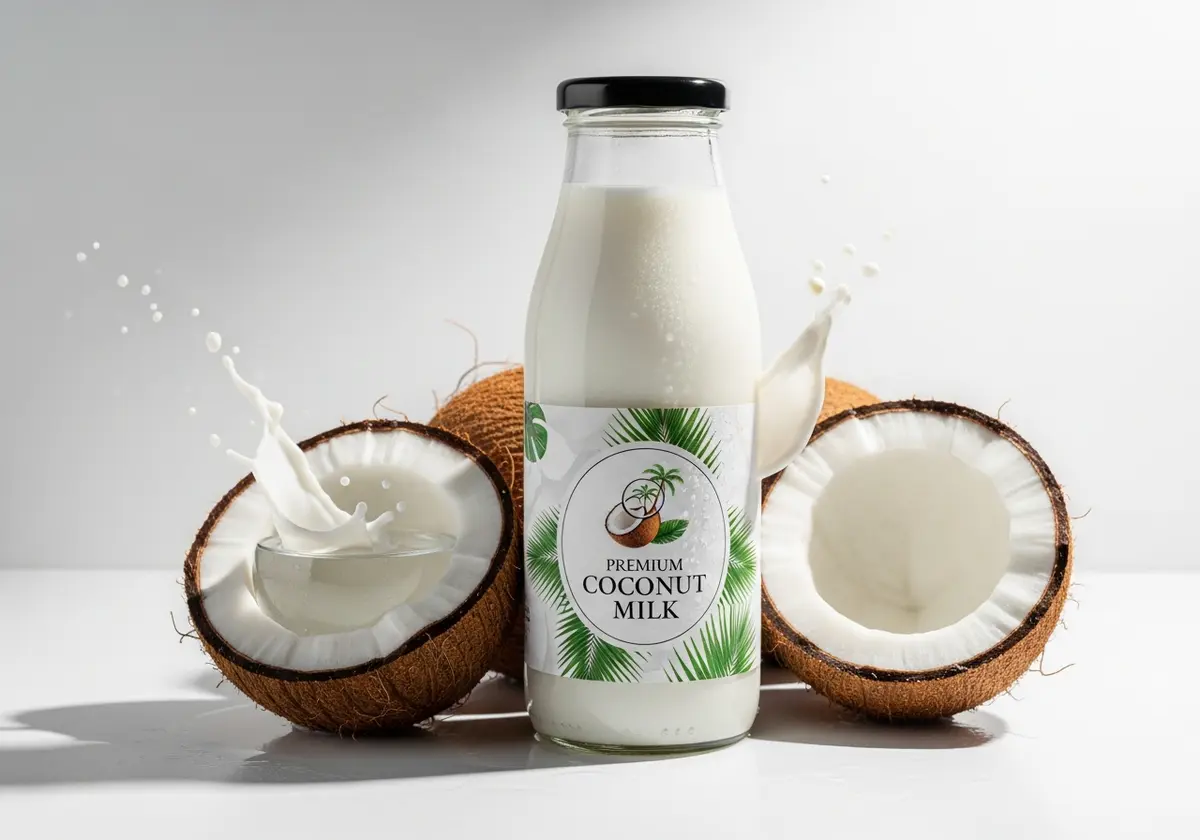
Choosing a Thai coconut products supplier
“Coconut products” describes several materially different ingredients. Coconut milk is an emulsion used in curries, soups, beverages, and sauces. Coconut cream is more concentrated and is selected for desserts, fillings, toppings, and rich recipes. Coconut milk powder is a dry ingredient valued by manufacturers that need easy storage and controlled dosing. Coconut water, desiccated coconut, coconut oil, and coconut-based snacks have different technical and freight requirements again.
Before requesting a quote, write a product brief. State whether the product is retail-ready, food-service, or an ingredient; the destination country; preferred pack size; target fat percentage; additive policy; organic or conventional status; halal or other documentation needs; and forecast volume. “Thai coconut milk” alone does not identify a purchase specification.
How to compare Thai coconut product formats
| Format | Typical commercial use | Key specification questions | Logistics considerations |
|---|---|---|---|
| Canned coconut milk | Retail, restaurants, Asian grocery | Fat %, viscosity, ingredients, can size | Ambient storage; inspect seams and dents |
| UHT coconut milk | Retail, beverage and food service | Aseptic format, fat %, opening life | Shorter shelf-life window; FIFO is important |
| Coconut cream | Desserts, sauces, fillings | Fat %, stabilizer system, texture | Confirm separation and application performance |
| Coconut milk powder | Dry mixes, bakery, instant meals | Solubility, carrier, moisture, fat | Moisture protection and dry warehouse needed |
| Desiccated coconut | Bakery, confectionery, snack products | Cut, moisture, microbiology | Protect from humidity and odors |
| Coconut oil | Cooking, personal care, formulations | Refining, acidity, odor, origin | Temperature and packaging compatibility |
The table is a starting point, not a substitute for a technical data sheet. For example, two cans with the same net weight may behave differently in a curry base because their fat content, homogenization, and stabilizer system differ. Ask for a sample and test it in the actual recipe before committing to a large shipment.
Supplier qualification beyond a quotation
Request a current product specification, ingredient declaration, nutrition panel, allergen statement, shelf-life statement, packing details, and a representative certificate of analysis. The certificate should identify the lot and the tests performed; a generic marketing sheet is not a lot release document. Depending on destination and product, buyers may also need microbiological results, heavy-metal or pesticide information, origin documents, and certificates required by the importing authority.
Traceability deserves particular attention. Ask how a finished lot is linked to production records, packaging materials, and dispatch documents. Ask what happens if a customer reports a damaged or off-specification case. A serious supplier should explain its complaint process and retain samples according to its internal procedures. Buyers should independently confirm which certifications are current and applicable to the exact product and facility rather than relying on a logo in a presentation.
Capacity is also more than an annual number. Confirm minimum order quantity, lead time for standard stock, lead time for private label, carton configuration, pallet pattern, and the number of lots that can be combined in one container. If a launch depends on one vessel date, ask about production booking and contingency options early.
Packaging, labeling, and import planning
Retail packaging needs to comply with the destination’s language, nutrition, allergen, additive, net-content, recycling, and lot-code rules. The importer remains responsible for local compliance, even when a supplier provides artwork support. Send approved artwork through a controlled approval process and check the printed proof against the purchase order. For food-service packs, confirm whether the label must include preparation instructions, storage information, and a local importer address.
Cartons should be evaluated for stacking strength and pallet stability, not merely attractive printing. Cans need protection from crushing and seam damage; cartons need protection from puncture and corner leakage. Powder requires a moisture barrier and clean, dry handling. Ask for outer-case dimensions and gross weight so your freight forwarder can model container utilization accurately.
Commercial terms that prevent avoidable disputes
Clarify whether the quote is EXW, FOB, CIF, or another agreed Incoterm, and specify currency, validity, payment milestones, and what documents are included. A purchase order should state product code, pack size, acceptable remaining shelf life at shipment, lot arrangement, pallet requirements, and inspection rights. It should also describe the process for handling shortage, transit damage, or a material specification deviation.
Do not compare offers on unit price alone. Model product cost, inland transport, ocean freight, insurance, duty, clearance, port charges, inspection, warehousing, and expected write-off. A larger pack may lower packaging and freight per kilogram but move more slowly in retail. Conversely, a small pack can improve shelf velocity while consuming more cartons and pallet space.
Practical checklist before placing the first order
- ☐Define the application, channel, destination, and target annual volume.
- ☐Specify fat percentage, ingredients, stabilizers, pack size, and shelf life.
- ☐Request a current specification, sample, lot-specific COA example, and allergen statement.
- ☐Verify the producing facility, applicable certificates, and traceability process.
- ☐Test the sample in the commercial recipe and after normal storage.
- ☐Approve bilingual or destination-compliant artwork and case markings.
- ☐Confirm MOQ, lead time, pallet configuration, and container loading plan.
- ☐Agree Incoterm, payment terms, inspection process, and claims procedure.
- ☐Check import permits, duties, labeling rules, and remaining shelf-life requirements.
- ☐Plan FIFO stock rotation and an arrival inspection for every shipment.
How MC INTERNATIONAL can support a coconut program
MC INTERNATIONAL discusses coconut milk, cream, powder, and related Thai specialty products according to the buyer’s intended application. It produces products it sells and works with qualified partner companies where a partner is the appropriate source for a specific pack, formulation, or capacity requirement. Product availability, documentation, MOQ, and lead time should be confirmed for each order rather than assumed from a catalogue.
Review the Thai coconut products supplier category or contact the team at sales@mcispcoltd.com or WhatsApp +66 99 437 2193. For a format-specific comparison, see our coconut milk powder sourcing guide. Share your destination, application, pack size, and expected volume so the response can be based on a real specification.
Frequently asked questions
What should I send when requesting a quotation?
Send destination country, product and format, target fat percentage, pack size, estimated quantity, required certifications or documents, preferred Incoterm, and desired delivery window. This reduces revisions and makes competing offers comparable.
Can a Thai supplier support private-label packaging?
Many programs can be assessed for private label, but artwork, MOQ, cylinder or plate requirements, lead time, and packaging approval vary by format and facility. Confirm these points before designing final artwork.
Is canned coconut milk always better than UHT?
No. Canned formats can offer a longer ambient shelf-life window, while UHT can suit fast-moving retail and some food-service uses. Choose after comparing turnover, pack size, handling, and destination requirements.
How do I confirm a coconut product is suitable for my recipe?
Request a sample with its specification and test it in the production recipe at normal dilution, heat treatment, and holding conditions. Check flavor, emulsion stability, viscosity, and final yield rather than evaluating it only from the package.
Does MC INTERNATIONAL manufacture every coconut product?
No. MC INTERNATIONAL produces products it sells and also works with qualified partner companies where relevant. The producing facility and documentation for the specific item should be confirmed in the quotation and order documents.